

Sustainability · 2025
In this section51 topics
- Sustainability Policy2 items
- Sustainability Goals & UN SDGs3 items
- Policy Review2 items
- Business Value Chain1 item
- Stakeholder Analysis1 item
- Environmental Policy & Guidelines3 items
- Environmental Policy Review1 item
- Energy — Plan & Guidelines2 items
- Energy — Electricity Consumption1 item
- Energy — Fuel Consumption1 item
- Energy — Targets2 items
- Energy — Performance & Outcomes2 items
- Water — Plan & Guidelines2 items
- Water — Withdrawal, Discharge & Consumption1 item
- Water — Targets2 items
- Water — Performance & Outcomes2 items
- Waste — Plan & Guidelines2 items
- Waste — Generation, Disposal & Recycling1 item
- Waste — Targets2 items
- Waste — Performance & Outcomes2 items
- GHG — Plan & Guidelines2 items
- GHG — Emissions1 item
- GHG — Emissions Verification3 items
- GHG — Principles & Standards1 item
- GHG — Targets1 item
- GHG Targets — Net Zero1 item
- GHG Targets — Carbon Neutrality1 item
- GHG — Performance & Outcomes2 items
- Environmental Legal Incidents1 item
- Social Policy & Guidelines3 items
- Social Policy Review1 item
- Social — Principles & Standards Practised1 item
- Human Rights Due Diligence2 items
- Employees — Plan & Guidelines3 items
- Employees — Workforce1 item
- Employees — Remuneration & Provident Fund1 item
- Employees — Training & Development1 item
- Employees — Occupational Health & Safety1 item
- Employees — Labour Relations1 item
- Employees — Employee Representation2 items
- Employees — Targets2 items
- Employees — Performance & Outcomes2 items
- Customers — Plan & Guidelines2 items
- Customers — Satisfaction Results1 item
- Customers — Targets2 items
- Customers — Performance & Outcomes2 items
- Community & Social — Plan & Guidelines3 items
- Community & Social — Targets2 items
- Community & Social — Performance & Outcomes2 items
- Law Violation Incidents1 item
- Law Violations — Case Detail & Corrective Measures1 item
Sustainability Policy
Has a Sustainability Policy
Yes
Policy Description
The company is committed to conducting business in accordance with sustainable development principles, recognizing its social responsibilities and obligations towards stakeholders within the value chain. This commitment is reflected in the company’s high-quality products, which meet international standards. The company upholds ethical business practices and good corporate governance principles while respecting human rights with equality and fairness. The company places significant importance on its employees, recognizing them as invaluable assets. It is dedicated to fostering job stability and career advancement for all employees equitably, ensuring workplace safety, and promoting occupational health. Furthermore, the company respects human dignity while supporting social initiatives aimed at environmental conservation and improving the quality of life in communities. These efforts align with the company's sustainability vision and the United Nations Sustainable Development Goals (UN SDGs), as well as various international standards. Consequently, the company has established a management framework to guide business operations in line with international best practices, incorporating the following strategies and policies.
Economic & Governance Dimension
Strategy: Committed to creating positive customer experiences and developing sustainable relationships for the company's sustainable economic growth.
Enhancing Employee Skills: Promote the development of employees’ skills to provide exceptional and friendly services, thereby enhancing customer experience and maximizing customer satisfaction.
Advancing Information Technology Systems: Continuously improve and modernize information technology systems to support accurate, appropriate, and timely data collection and customer response.
Building Customer Relationships and Communication: Design effective processes and methods for establishing positive customer relationships and communication, ensuring a clear understanding of customer needs in a timely manner and creating memorable customer experiences consistently.
Good Corporate Governance Commitment: Uphold the principles of good corporate governance to enhance transparency and build trust among shareholders and stakeholders.
Social Dimension
Strategy: Committed to enhancing product standards and conducting research and development to improve the quality of life and well-being of society.
Raising Awareness of Product Quality: Promote awareness and understanding of product quality and continuous improvements to meet the needs of a better quality of life and well-being in society.
Integrated Research and Development: Develop an integrated research and development system emphasizing participation from all parties involved to ensure diversity in approaches and knowledge for development.
Cultivating Innovation Culture: Establish motivational processes and encourage a culture of continuous learning and development in product innovation and process improvement.
Environmental Dimension
Strategy: Committed to fostering collaboration with stakeholders to create value from waste materials throughout the business value chain, enhancing value creation and minimizing waste disposal.
Stakeholder Collaboration and Learning: Promote cooperation and knowledge sharing among stakeholders to maximize the value and utilization of waste materials.
Adopting Advanced Technologies: Commit to sourcing advanced and efficient technologies to increase the proportion of waste materials reused effectively in the production process.
Awareness and Cultural Promotion: Promote awareness, create motivation, and encourage a culture of maximizing the value of waste materials, thereby reducing waste generation and enhancing the value of discarded materials.
Sustainability Goals & UN SDGs
Has Sustainability Goals
Yes
Goals Description
Economic & Governance Dimension
Short Term: In the short term, the company focuses on improving service efficiency and maximizing customer satisfaction to increase sales and retain existing customers. This aligns with SDG Goal 8, which promotes sustained, inclusive, and sustainable economic growth. By providing employee training programs, utilizing advanced CRM (Customer Relationship Management) and AI technologies to analyze customer data, the company can respond to customer needs accurately and promptly. This results in enhanced customer satisfaction and loyalty.
Long Term: In the long term, the company emphasizes the development of innovations and the improvement of sustainable production processes. This includes adopting advanced technologies, designing products that support recycled materials, and optimizing production efficiency. This strategy aligns with SDG Goal 9 and Goal 12, which focus on building resilient infrastructure, fostering innovation, and promoting sustainable consumption and production patterns. By leveraging technology and innovation, the company enhances its competitive edge and meets future market demands.
Social Dimension
Short Term: In the short term, the company aims to raise awareness and understanding of product quality to build customer and consumer trust. This is achieved through organizing seminars on product quality and its impact on consumers' lives, using real case studies to demonstrate positive social impacts, and disseminating information via multiple channels. This approach aligns with SDG Goal 3, which ensures healthy lives and promotes well-being for all.
Long Term: In the long term, the company focuses on developing a sustainable research and innovation system through collaborative efforts among internal teams and external partners, such as educational institutions, research organizations, and business partners. This creates a diverse knowledge base and continuous product development, aligning with SDG Goal 4 and Goal 9, which emphasize promoting quality education, lifelong learning opportunities, and fostering innovation.
Environmental Dimension
Short Term: In the short term, the company prioritizes waste reduction and the reuse of leftover materials. This includes collaborating with partners and customers for recycling, utilizing efficient machinery for processing waste materials, and optimizing production processes for better efficiency. This approach aligns with SDG Goal 12, which promotes sustainable consumption and production patterns.
Long Term: In the long term, the company focuses on reducing environmental impact and adapting to climate change. This is achieved by investing in environmentally friendly technologies, developing energy-efficient products, and fostering partnerships with external organizations such as research institutions and business partners. These collaborations aim to create sustainable solutions and reduce greenhouse gas emissions, aligning with SDG Goal 13 and Goal 17.
UN Sustainable Development Goals
| SDG Goal |
|---|
| Goal 3 Good Health and Well-being |
| Goal 3 Good Health and Well-being |
| Goal 4 Quality Education |
| Goal 4 Quality Education |
| Goal 8 Decent Work and Economic Growth |
| Goal 8 Decent Work and Economic Growth |
| Goal 9 Industry, Innovation and Infrastructure |
| Goal 9 Industry, Innovation and Infrastructure |
| Goal 12 Responsible Consumption and Production |
| Goal 12 Responsible Consumption and Production |
| Goal 13 Climate Action |
| Goal 13 Climate Action |
| Goal 17 Partnerships for the Goals |
| Goal 17 Partnerships for the Goals |
Policy Review
Policy Reviewed This Year
No
Policy Changed This Year
No
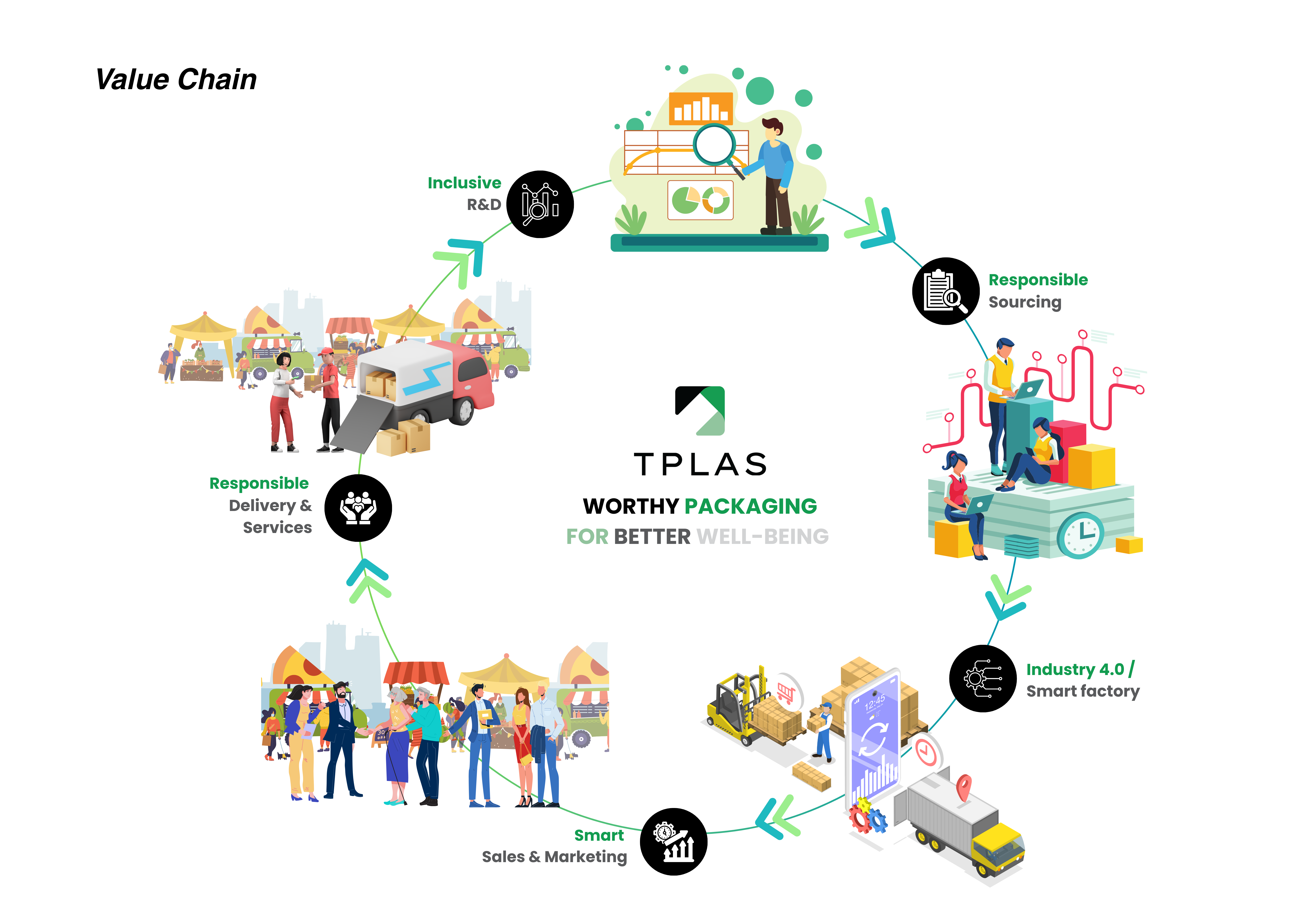
Business Value Chain
Value Chain Description
1. Responsible Sourcing
The company places great importance on responsible sourcing of raw materials and production components. It emphasizes the selection of high-quality and environmentally friendly materials. The company carefully chooses suppliers who demonstrate social and environmental responsibility, ensuring alignment with the company's sustainability and social responsibility policies. This approach is consistent with the vision of building a sustainable value chain with accountability towards society and the environment.
2.Industry 4.0 / Smart Factory
The company adopts Industry 4.0 technologies in its production processes and factory management to enhance efficiency and reduce costs. It utilizes Internet of Things (IoT) and Automation technologies for real-time monitoring and control of production processes, allowing continuous performance optimization. Additionally, the company leverages Big Data Analytics to analyze production data and strategically plan resource utilization for maximum efficiency.
3.Smart Sales & Marketing
The company employs modern marketing strategies, adapting to the rapidly changing consumer behavior. It plans to implement digital technology and Marketing Technology (Mar-Tech) for precise customer data analysis and targeted marketing campaigns. Utilizing Data Analytics enables the company to better understand customer behavior and needs, thereby developing highly effective and targeted marketing strategies.
4. Responsible Delivery & Services
The company emphasizes responsible distribution and customer service, focusing on direct delivery to customers and comprehensive after-sales service. It prioritizes excellent and customer-friendly service to foster satisfaction and loyalty. The company actively listens to customer complaints and feedback, using this information to improve products and services to better meet customer needs. It also ensures efficient and responsive after-sales support, enhancing customer experience and building long-term customer relationships.
5. Inclusive R&D
The company values Research & Development (R&D) by fostering collaborative projects involving employees in the research and development process. This inclusive approach encourages diversity and creativity in product development. The company focuses on continuous innovation that meets the evolving needs of customers and society, such as developing environmentally friendly and safe packaging solutions for consumers.
Stakeholder Analysis
Stakeholder Analysis
| Stakeholder Type | Stakeholders | Stakeholder Expectations | Response to Expectations | Communication Activities |
|---|---|---|---|---|
| External stakeholders | 2913 · Description: Shareholders | 1.Long term strategies and goals for the organization growth
2.Good operating results and sustainable growth
3.Good corporate governance
4.Steady dividend payments | 1.Report to shareholders about the Company’s future trends both in positive and negative perspectives.
2.Act in honesty, make decisions with care and be fair to every shareholder.
3.Supervise on the operation to ensure good financial positions and operating results.
4.Do not seek for benefits of yourselves or other people by using the corporate information that is not yet disclosed to the public or take any actions that could potentially cause conflict of interests.
5.The Company must treat every shareholder equally in shareholder’s meetings. | 2938 · Description: Visit · 2944 · Description: Annual General Meeting (AGM) · 2945 · Description: Complaint Reception |
| External stakeholders | 2899 · Description: Suppliers | 1.Credibility, reputation and corporate governance
2.Stability on financial positions
3.Transparency in operation and procurement
4.Fulfil the agreements on promotion or elevation of trade partner operations | 1.Strictly fulfil the agreements or promises with trade partners
2.Fairly select trade partners following evaluation criteria and select the Company's trade partners to prevent corruption and misconduct in every procurement process | 2938 · Description: Visit |
| External stakeholders | 2911 · Description: Raw material distributors · 2912 · Description: Product distributors | 1.Fair Agreements
2.Timely Payment for Services
3.Clear scope of work | 1. Clearly define agreements in the employment contract
2. Maintain quality standards of work
3.Provide compensation as per the agreed terms | 2938 · Description: Visit · 2945 · Description: Complaint Reception |
| Internal stakeholders | 2921 · Description: Employees | 1.Appropriate income and welfare
2.Good environment and safe for work
3.Continuously improve the employee’s potential
4.Appropriate career progression
5.Work system that support the Emerging Infectious Diseases situation | 1.Treat employees with respect in honor and personal rights
2.Maintain work environment in the conditions that is safe for life and assets of the employees
3.Appoint and transfer as well as reward and punish employees with honesty and based on knowledge, ability and suitability of each employee
4.Place importance on knowledge development and employee’s potential by giving continuous development
5.Define compensation for employees fairly following the market situations, market competition, job characteristics, work performance and the Company’s ability to pay for such compensation
6.Avoid any unfair actions that might affect the stability of employees’ job position
7.Inform all employees about policy and welfare that the employees are entitled to with employee manuals, group health insurance manuals, group life insurance and provident funds.
8.Allow employees to suggest or complain about work and define solution that would benefits all parties and create good relationship in teamwork | 2942 · Description: Internal Meeting · 2945 · Description: Complaint Reception · 2946 · Description: Employee Engagement Survey · 2948 · Description: Training / Seminar |
| External stakeholders | 2902 · Description: Community · 2928 · Description: Society | 1.Operate with responsibilities to environment/community
2.Disclose information clearly and timely
3.Allow a participation on credible operation checks
4.Participate in sustainable development in the quality of life for the community and society
5.Hear and solve related problems immediately | 1.Set a business operation policy by considering mainly on environment and strictly follow the laws and regulations that are enforced about the environment
2.Set a clear operation policy on Corporate Social Responsibility (CSR) and adhere to it in the organization
3.Support the Company’s employees to have conscious mind and responsibility for the environment and society
4.Respect customs, traditions and cultures of each local places that the Company operates
5.Constantly carry out activities to participate in the society, community and environment in order to help elevate the quality of life in the area that the Company locates, both carry out by the Company and by cooperating with public sector, private sector and community
6.Cooperate in activities with communities around the area that the Company locates as appropriate
7.Respond quickly and efficiently to incidents that impact on community and environment, life and assets due to the Company’s operation by giving full cooperation to government officials and related parties | 2938 · Description: Visit · 2940 · Description: Social Event · 2941 · Description: Online Communication · 2945 · Description: Complaint Reception |
| External stakeholders | 2931 · Description: Government agencies and Regulators | 1.Follow the laws and operate with transparency
2. Cooperate in activities from public sector | 1.Determine to follow laws, rules and regulations by the government
2.Promote the cooperation and support public and private measures in the anti-corruption and unfair pay | 2938 · Description: Visit · 2939 · Description: Press Release |
| External stakeholders | 2923 · Description: Customers | 1.Products with quality, standards and safety
2.Deliver in a timely manner
3.Impressive after sales service | 1.Determine to research and develop for the goods and services in order to respond to customer needs
2.Deliver quality goods and services under fair conditions
3.Provide information about goods and services accurately and sufficiently so that customers have enough information to make decisions. Never exaggerate both in advertisement or other communication channels that could cause misunderstanding about the quality, quantity and conditions of goods and services
4.Establish procedures that would allow customers to notify about problems or inappropriate services so that the Company could prevent and solve them immediately and use such information to fix or improve products and services in the future
5.Keep confidential information of customers by never disclose or misuse them | |
| External stakeholders | 2898 · Description: Competitors | 1. Operate with transparency and fairness. Never take advantages in doing businesses | 1.Act under the rules of healthy competition
2.Do not seek for competitors’ confidential information with dishonest or inappropriate methods for the Company’s business advantages
3.Do not maliciously accuse or aim to destroy competitors’ reputation
4.Never act on any intellectual property infringement of others or competitors | 2938 · Description: Visit |
| External stakeholders | 2894 · Description: Creditor | 1.Follow the agreed conditions under the laws | 1.Strictly follow the conditions on agreements or as agreed
2.In case of unable to follow the agreed conditions, the Company would notify | 2938 · Description: Visit · 2945 · Description: Complaint Reception |
Environmental Policy & Guidelines
Has an Environmental Policy
Yes
Policy Description
The company is committed to operating its business under the Green Industry concept, prioritizing the sustainable reduction of environmental and community impacts. This includes reducing the consumption of natural resources and energy, preventing and controlling pollution, improving production processes for greater efficiency, as well as promoting social responsibility at all levels of the supply chain. The company has established an environmental policy that strictly adheres to relevant laws and regulations to prevent potential environmental issues and build trust among communities and all stakeholders.
In terms of energy management, the company has implemented an Energy Performance Contract (EPC) project along with the installation of a Solar Rooftop power generation system. This reduces reliance on grid electricity, lowers energy costs, and enhances energy security. The use of renewable solar energy also contributes to reducing greenhouse gas emissions and creates a positive long-term environmental impact.
Regarding water resource management and water quality, the company has implemented water recycling technology, along with highly efficient wastewater treatment systems. Water quality is regularly monitored and tracked to ensure that discharged wastewater meets standards and does not adversely affect communities. Furthermore, the company promotes and campaigns among employees to foster awareness of water conservation and efficient water resource utilization, aiming to cultivate a culture of environmental conservation within the organization.
For waste management, waste reduction, and greenhouse gas emission reduction, the company has adopted the 3R (Reduce, Reuse, Recycle) approach in its operations to enhance resource efficiency and minimize the amount of waste requiring disposal. Furthermore, it has adopted the Science Based Targets initiative (SBTi) framework to set targets and operational plans towards achieving Net Zero greenhouse gas emissions. The company is committed to conducting business in conjunction with sustainable environmental stewardship and continuously supporting national and international sustainable development goals.
Environmental Guidelines
| Guideline |
|---|
| Electricity Management |
| Fuel Management |
| Renewable/Clean Energy Management |
| Water Management |
| Waste Management |
| Greenhouse Gas and Climate Change Management |
Environmental Policy Review
Policy Reviewed This Year
No
Energy — Plan & Guidelines
Has an Energy Management Plan
Yes
Plan Description
The Company focuses on maximizing energy efficiency and minimizing wasteful energy consumption by continuously implementing energy management measures, both in terms of improving energy efficiency and increasing the proportion of renewable energy use. Key operational guidelines include:
Implementation of energy efficiency improvement projects in the form of Energy Performance Contracts (EPC).
Installation of solar rooftop power generation systems to produce renewable energy for internal organizational use.
As a result of these measures, the Company expects to significantly reduce electricity consumption and Scope 2 greenhouse gas emissions, which is a crucial mechanism in supporting greenhouse gas reduction targets and fostering long-term organizational sustainability.
Energy — Electricity Consumption
Electricity Consumption
| Metric | Current Year | Previous Year | Two Years Ago |
|---|---|---|---|
| Total electricity consumption within the organization (Kilowatt-Hours) | 5,481,447.58 | 5,753,844.14 | 6,036,685.67 |
| Electricity purchased for consumption from non-renewable energy sources (Kilowatt-Hours) | 4,729,000 | 4,970,000 | 5,326,384 |
| Electricity purchased or generated for consumption from renewable energy sources (Kilowatt-Hours) | 752,447.58 | 783,844.14 | 710,301.67 |
Energy — Fuel Consumption
Fuel Consumption
| Metric | Current Year | Previous Year | Two Years Ago |
|---|---|---|---|
| Crude oil (Barrels) | |||
| Coal (Metric tonnes) | |||
| Jet fuel (Litres) | |||
| Diesel (Litres) | 9,335.49 | 11,350.96 | 10,460.6 |
| Gasoline (Litres) | 25,463.25 | 28,655.67 | 28,684.15 |
| Fuel oil (Litres) | |||
| Natural gas (Standard cubic feet) | |||
| LPG (Kilograms) | |||
| Steam (Metric tonnes) |
Energy — Targets
Has Set Targets
Yes
Targets
| Target | Base Year | Base Year Value | Target Year | Target Change (%) | Unit |
|---|---|---|---|---|---|
| Reduction of electricity purchased for consumption | 2,024 | 4,970,000 | 2,027 | 10 | Kilowatt-hour |
| Increase of electricity consumption from renewable energy sources | 2,024 | 783,844.14 | 2,027 | 20 | Kilowatt-hour |
Energy — Performance & Outcomes
Has Performance Results
Yes
Performance Description
o Energy Efficiency Improvement Project with Guaranteed Savings (Lean Energy)
TPLAS prioritizes maximum energy efficiency and is committed to reducing wasteful energy consumption to foster business sustainability while mitigating environmental impact. The Company has continuously implemented energy efficiency improvement projects in the form of Energy Performance Contracts (EPC) since 2024. These projects are expected to reduce electricity consumption from the grid by an average of approximately 917,081 kWh per year, resulting in energy cost savings of over 3,868,601 Baht per year.
For the year 2025, the Company was able to reduce electricity consumption from the grid by 241,000 kWh, representing a value decrease of approximately 3,253,065.42 Baht, which is a rate of Electricity consumption from the grid decreased by 4.85 percent when compared to 2024, which reflects the efficiency of project implementation and the Company's commitment to systematically managing electricity consumption. The Company continues to pursue energy efficiency improvement projects to concretely achieve its target of reducing electricity consumption from the grid by 2027.
Rate of electricity consumption from the grid system | |||
Year 2024 | Year 2025 | Change | % |
4,970,000 kilowatt-hour | 4,729,000 kilowatt-hour | Decreased by 241,000 kilowatt-hour | -4.85 |
o Solar Power Generation System Installation Project (Solar Rooftop)
TPLAS recognizes the importance of promoting renewable energy use to reduce reliance on grid electricity, lower energy costs, and mitigate environmental impact, as part of its business operations under the ESG (Environmental, Social, and Governance) framework. Therefore, the Company has implemented a project to install solar power generation systems (Solar Rooftop) on the roofs of its head office building and production buildings to continuously increase the proportion of clean energy used in its operations and production.
In the initial phase of the project, the Company installed a solar power generation system (Solar Rooftop) at its head office building with an installed capacity of 64 kWp, and at two production buildings with a combined installed capacity of 563.76 kWp. This Solar Rooftop installation plays a crucial role in reducing the Company's electricity costs by generating renewable energy for internal use, replacing electricity purchased from the main grid. In addition to the benefits of reducing energy expenses, the use of self-generated renewable energy also helps reduce Greenhouse Gas Emissions, which aligns with the Company's business operations based on ESG (Environmental, Social, and Governance) principles and reflects its commitment to environmentally responsible energy management. The Company has set a goal to expand the installation of solar power generation systems to cover the roofs of all factory buildings by 2026, aiming to continuously increase the proportion of renewable energy use within the organization and reduce reliance on grid electricity in the long term. This investment in solar power generation systems not only enhances energy efficiency and reduces operating costs but also serves as a key strategy to strengthen energy security and support the organization's concrete development towards long-term sustainability.
For the year 2025, the Company's rate of electricity consumption from renewable energy is as follows:
Rate of electricity consumption from renewable energy | |||
Year 2024 | Year 2025 | Change | % |
783,844.14 kilowatt-hour | 752,447.58 kilowatt-hour | Decreased by 31,396.56 kilowatt-hour | -4.01 |
Water — Plan & Guidelines
Has a Water Management Plan
Yes
Plan Description
The Company recognizes the importance of water resources and is committed to managing water usage efficiently and responsibly towards the environment, to prevent impacts on surrounding communities and ecosystems. The operational guidelines for water management include:
-
Regular monitoring and recording of water consumption.
-
Improving production processes and internal organizational activities to reduce unnecessary water usage.
-
Maintaining piping systems and related equipment to reduce water loss from leaks.
-
Campaigning and raising awareness among employees regarding water conservation.
Furthermore, the Company monitors wastewater quality and manages wastewater in accordance with relevant legal requirements and standards, to ensure that the Company's operations do not adversely affect the environment and surrounding communities.
Water — Withdrawal, Discharge & Consumption
Water Withdrawal, Discharge & Consumption
| Metric | Current Year | Previous Year | Two Years Ago |
|---|---|---|---|
| Total water withdrawal (Cubic meters) | 28,420 | 33,756 | 30,591 |
| Total water withdrawal by third-party water (Cubic meters) | 28,420 | 33,756 | 30,591 |
| Total water withdrawal by surface water (Cubic meters) | |||
| Total water withdrawal by groundwater (Cubic meters) | |||
| Total water withdrawal by seawater (Cubic meters) | |||
| Total water withdrawal by produced water (Cubic meters) | |||
| Percentage of wastewater treated before discharge (%) | |||
| Total water discharge (Cubic meters) | |||
| Total water discharge to third-party water (Cubic meters) | |||
| Total water discharge to surface water (Cubic meters) | |||
| Total water discharge to groundwater (Cubic meters) | |||
| Total water discharge to seawater (Cubic meters) | |||
| Total water consumption (Cubic meters) | 28,420 | 33,756 | 30,591 |
| Recycled water (Cubic meters) | 0 | 0 | 0 |
Water — Targets
Has Set Targets
Yes
Targets
| Target | Base Year | Base Year Value | Target Year | Target Change (%) | Unit |
|---|---|---|---|---|---|
| Reduction of water withdrawal | 2,024 | 33,756 | 2,027 | 10 | Cubic meters |
Water — Performance & Outcomes
Has Performance Results
Yes
Performance Description
Wastewater from the factory primarily originates from office buildings and worker dormitories. This wastewater is treated to ensure appropriate water quality management. A grease trap is used as a treatment tool to reduce grease stains from various cooking activities. The treated water is then discharged into natural water sources within the factory premises. Some portions, such as rainwater from the factory roof, are discharged into natural water sources outside the factory. These undergo treatment, and wastewater quality, including BOD and COD levels, is regularly monitored annually.
For the year 2025, the COD[1] value was 52.00 milligrams per liter, which is below the standard limit of 750 milligrams per liter. The BOD[2] value was 5.00 milligrams per liter, not exceeding 500 milligrams per liter. These values meet the specified standards before discharge into natural water sources outside the factory, ensuring that the effluent does not impact the water quality of natural receiving bodies and that downstream communities can utilize the water source without any adverse effects. The company encourages employees at the head office to be water-conscious and continuously conserve water for consumption and general use. However, overall water consumption has continued to increase compared to 2024.
Waste — Plan & Guidelines
Has a Waste Management Plan
Yes
Plan Description
The Company prioritizes efficient waste management, focusing on reducing waste at the source, segregation, and reuse to support the concept of a Circular Economy. The operational guidelines for waste management include:
-
Systematic segregation of waste by type
-
Reducing waste from production processes and office activities
-
Promoting the reuse of recyclable or reusable materials
-
Strict management of hazardous waste in accordance with legal requirements
-
Monitoring waste volume for analysis and improvement of management efficiency
Even though the Company's waste volume increased in 2025 compared to the previous year, the Company remains committed to continuously developing and enhancing waste management measures, including the development of innovations and new approaches to sustainably reduce environmental impact.
Waste — Generation, Disposal & Recycling
Waste Generation, Disposal & Recycling
| Metric | Current Year | Previous Year | Two Years Ago |
|---|---|---|---|
| Total waste generated (Kilograms) | 80,424.41 | 76,568 | 111,792.06 |
| Non-hazardous waste (Kilograms) | 80,424.41 | 76,568 | 111,792.06 |
| Non-hazardous waste - Landfilling (Kilograms) | |||
| Non-hazardous waste - Incineration (with energy recovery) (Kilograms) | |||
| Non-hazardous waste - Incineration (without energy recovery) (Kilograms) | |||
| Non-hazardous waste - Other disposal operations (Kilograms) | |||
| Hazardous waste (Kilograms) | 0 | 0 | 0 |
| Hazardous waste - Landfilling (Kilograms) | |||
| Hazardous waste - Incineration (with energy recovery) (Kilograms) | |||
| Hazardous waste - Incineration (without energy recovery) (Kilograms) | |||
| Hazardous waste - Other disposal operations (Kilograms) | |||
| Total reused/recycled waste (Kilograms) | |||
| Reused/Recycled non-hazardous waste (Kilograms) | |||
| Reused non-hazardous waste (Kilograms) | |||
| Recycled non-hazardous waste (Kilograms) | |||
| Reused/Recycled hazardous waste (Kilograms) | |||
| Reused hazardous waste (Kilograms) | |||
| Recycled hazardous waste (Kilograms) |
Waste — Targets
Has Set Targets
Yes
Targets
| Waste Type | Disposal Approach | Target | Base Year | Base Year Value | Target Year | Target Change (%) | Unit |
|---|---|---|---|---|---|---|---|
| Non-hazardous waste | 2758 · Description: Reuse · 2759 · Description: Recycle | Reduce waste volume | 2,024 | 76,568 | 2,027 | 10 | Kilograms |
Waste — Performance & Outcomes
Has Performance Results
Yes
Performance Description
The company prioritizes systematic waste and scrap management in its production processes by employing the 3R (Reduce, Reuse, Recycle) approach to minimize the amount of waste requiring disposal and maximize the beneficial reuse of resources. In the company's production process, plastic scraps are generated from various stages, such as molding, trimming, and product packaging. These plastic scraps are sorted and re-entered into the recycling process to be manufactured into carrier bags, which are products that do not come into contact with food. The company places importance on customer safety and product standards; therefore, recycled plastic from the production process is not used to manufacture bags that directly contact food. Furthermore, for plastic scraps that cannot be reused in the production process, the company has a policy to sell them to external companies that purchase them for melting into plastic pellets and subsequent use in other plastic industries. This is another approach to help reduce plastic waste requiring disposal and also promotes the Circular Economy, which enables plastic resources to be reused instead of becoming waste.
Regarding general waste generated from employee dormitories, the company encourages employees to participate in waste management by clearly separating plastic waste from organic waste. Recyclable plastic waste, such as plastic water bottles and plastic packaging, is forwarded to recycling companies. Organic waste from consumption and daily life is disposed of appropriately according to environmental standards. For hazardous waste disposal, the company complies with environmental regulations by entrusting hazardous waste to licensed government-approved disposal contractors to ensure that hazardous waste is disposed of safely and without environmental impact.
The company continuously monitors and improves its waste management guidelines to ensure that resources used within the organization are managed efficiently and can minimize environmental impact. The company is committed to operating its business in an environmentally friendly manner and in accordance with the principles of sustainable development, to create a balance between business operations and long-term environmental stewardship.
In 2025, the company's total waste and scrap amounted to 80,424.41 kilograms, an increase of 3,856.41 kilograms or 5.04 percent compared to the previous year (2024). However, the company recognizes the potential impact of the increased volume of waste and scrap and remains committed to continuously developing and improving waste and scrap management measures to enhance sorting efficiency, reduce waste at the source, and promote reuse and valuable utilization of resources, while also fostering the development of environmentally friendly innovations to sustainably reduce environmental impact in the long term. Furthermore, the company conducts environmental quality measurements within its offices and surrounding operational areas at least once a year. The measurement results for 2025 indicate that air quality, odor, noise, and lighting levels comply with legal standards. No complaints from the community or formal complaints to government agencies regarding the impact of the company's production processes were found.
GHG — Plan & Guidelines
Has a GHG Management Plan
Yes
Plan Description
The Company places great importance on Climate Action operations to support Thailand's goal of achieving Carbon Neutrality by 2050 and Net Zero Greenhouse Gas Emissions by 2065. Currently, the Company has partially commenced greenhouse gas accounting. However, the collected data may not yet cover all operational processes. To enhance efficiency and tangibility in Climate Action operations, the Company has therefore established a plan for comprehensive greenhouse gas accounting, including direct greenhouse gas emissions (Scope 1), indirect greenhouse gas emissions from energy consumption (Scope 2), and other indirect greenhouse gas emissions occurring throughout the value chain (Scope 3). This will serve as a foundation for setting future organizational targets and measures for reducing greenhouse gas emissions.
GHG — Emissions
GHG Emissions
| Metric | Current Year | Previous Year | Two Years Ago | Remark |
|---|---|---|---|---|
| Total GHG emissions (Metric tonnes of carbon dioxide equivalent) | 27,231 | 25,382 | 29,310 | |
| Total greenhouse gas emissions 1 (Metric tonnes of carbon dioxide equivalent) | 109 | 124 | 123 | |
| Total greenhouse gas emissions 2 (Metric tonnes of carbon dioxide equivalent) | 2,168 | 2,485 | 2,663 | |
| Total greenhouse gas emissions 3 (Metric tonnes of carbon dioxide equivalent) | 24,954 | 22,773 | 26,524 | In 2025, the company's Scope 3 greenhouse gas emissions increased compared to 2024. This was primarily due to an increase in product manufacturing volume, which led to higher raw material consumption, particularly plastic pellets, the company's main raw material. |
GHG — Emissions Verification
Introduction
Greenhouse gas emission data for 2023, verified by Bureau Veritas Certification Contracting Country: THAILAND
Emissions Verified by a Third Party
Yes
Verifying Body
2648
GHG — Principles & Standards
Principles & Standards Applied
| Standard |
|---|
| 2671 |
GHG — Targets
Has Set GHG Targets
Yes
GHG Targets — Net Zero
Net Zero Targets
| Emission Scope | Base Year | Base Year Emissions | Near-term Target Year | Near-term Target Change (%) | Long-term Target Year | Long-term Target Change (%) | Target Year | Target Change (%) | Unit |
|---|---|---|---|---|---|---|---|---|---|
| 2716 | 2,023 | 29,310 | 2,025 | 1 | 2,065 | 50 | 2,025 | 1 | Metric tonnes of carbon dioxide equivalent |
GHG Targets — Carbon Neutrality
Carbon Neutrality Targets
| Emission Scope | Carbon Neutrality Certified | Base Year | Base Year Emissions | Target Year | Target Change (%) | Unit |
|---|---|---|---|---|---|---|
| 2716 | N | 2,023 | 29,310 | 2,050 | 50 | Metric tonnes of carbon dioxide equivalent |
GHG — Performance & Outcomes
Has Performance Results
Yes
Performance Description
The Company prioritizes systematic greenhouse gas management to support its Climate Action goals and align with national targets for carbon neutrality and net-zero greenhouse gas emissions. In the past period, the Company has commenced partial greenhouse gas inventory preparation, covering direct greenhouse gas emissions (Scope 1) and indirect greenhouse gas emissions from electricity consumption (Scope 2), as well as preparing to systematically expand the scope to collect data on other indirect greenhouse gas emissions (Scope 3).
In terms of greenhouse gas emission reduction, the Company has continuously implemented energy efficiency improvement projects, particularly the Energy Performance Contract (EPC) project, which commenced in 2024. This has enabled the Company to significantly reduce electricity consumption, contributing to the reduction of indirect greenhouse gas emissions from grid electricity consumption, and lowering long-term energy costs. Furthermore, the Company has invested in installing solar rooftop power generation systems at both its headquarters and manufacturing facilities, to increase the proportion of renewable energy used, replacing electricity from the grid. This not only helps reduce energy expenses but also plays a crucial role in reducing greenhouse gas emissions from operations (Scope 2) and concretely supports the transition to clean energy within the organization.
Overall, the Company's greenhouse gas management operations demonstrate progress in laying the groundwork for data, energy management, and renewable energy utilization. This information will be crucial for establishing baseline years, setting greenhouse gas reduction targets, and developing medium- to long-term greenhouse gas reduction plans, aimed at achieving sustainable growth and aligning with international ESG guidelines.
Environmental Legal Incidents
Legal Violation Incidents
| Metric | Current Year | Previous Year | Two Years Ago |
|---|---|---|---|
| Number of cases or incidents of legal violations or negative environmental impact (cases) | 0 | 0 | 0 |
Employees — Plan & Guidelines
Has an Employee Management Plan
Yes
Plan Description
The Company prioritizes comprehensive and systematic human resource management, focusing on fairness, safety, potential development, and promoting a good quality of life for employees. This aims to create an organizational culture that fosters work efficiency, employee engagement, and sustainable organizational growth. Human resource operations over the past year covered 6 key areas as follows:
1. Fair Employee Compensation
The Company believes that fair and appropriate compensation and benefits are crucial factors in boosting employee morale and loyalty to the organization. In the past year, various actions have been taken in this regard:
1.1 Compensation and Benefits Structure
The Company has established a systematic compensation structure based on performance (Performance-based Compensation) to motivate and encourage employee dedication. Compensation rates are set in accordance with industry standards, labor laws, and economic conditions, using a transparent, fair, and auditable performance evaluation system.
1.2 Employee Benefits
The Company provides comprehensive and appropriate welfare benefits, such as a provident fund, annual leave, sick leave as per entitlement, and other benefits that help promote the long-term quality of life, security, and well-being of employees.
1.3 Salary Adjustment and Bonus
The Company considers salary adjustments and bonus payments based on employee performance and organizational results, under clear, transparent, and fair criteria, to enhance employee motivation, satisfaction, and loyalty to the organization.
2. Employee Training and Development
The Company prioritizes the continuous development of employee potential to prepare them for changes in the business environment and increasing competition. The following actions are taken:
2.1 Internal Training Programs
The Company develops internal training plans annually, focusing on courses aligned with employee needs and the organization's strategic goals. This includes developing essential work skills such as safety, management, and effective problem-solving; leadership and team management development to enhance the capabilities of executives and supervisors; and occupational safety training, such as basic firefighting, fire evacuation, and safe use of machinery and equipment.
2.2 External Training Support
The Company supports employees in attending external training to enhance their knowledge and embrace new industry concepts, such as management and finance courses, and courses related to quality, safety, and management systems like ISO 9001:2015, GHPs & HACCP, to elevate the organization's operational standards.
3. Employee Engagement and Labor Relations
The Company prioritizes building good relationships and fostering employee engagement at all levels to enhance loyalty to the organization, a positive working atmosphere, and operational efficiency. Key activities undertaken include:
3.1 Internal Communication
The Company promotes open and comprehensive communication through appropriate internal channels, including employee meetings, communications from management, and internal public relations media, to ensure employees are regularly informed of the Company's direction, policies, and operational results.
3.2 Listening to Opinions and Suggestions
The Company provides opportunities for employees to express opinions, suggestions, and complaints through various channels, such as suggestion boxes, supervisor meetings, or internal communication channels, to promote participation in organizational development and improvement of the working environment.
3.3 Social and Community Activities
The Company encourages employees to participate in corporate social responsibility (CSR) activities through volunteer work, social assistance, and environmental initiatives, which foster pride, loyalty to the organization, and a positive corporate image.
4. Migrant Workers Management
The Company prioritizes responsible management of migrant workers within the framework of relevant labor laws and international human rights principles. It adheres to the principle of non-discrimination, regardless of race, religion, nationality, or gender. The Company ensures that migrant workers receive fair and equal rights, compensation, welfare, and employment conditions as general employees to promote their quality of life, safety, and job security.
4.1 Verification of Employment Documents and Processes for Legal Compliance
The Company meticulously and systematically verifies the employment documents of migrant workers to ensure compliance with labor laws and related regulations, such as work permits, identification documents, and employment contracts. The Company also regularly monitors the status of these documents to prevent illegal employment and reduce labor risks in the supply chain.
4.2 Providing Knowledge on Rights, Duties, and Occupational Safety
The Company provides communication and knowledge to migrant workers regarding their rights and duties under labor laws, safety and occupational health requirements, and work regulations. Communication methods are tailored to the context of the workers, enabling them to perform their duties safely, understand their rights, and reduce the risk of accidents or labor disputes.
5. Child Labor and Forced Labor Prevention
The Company adheres to labor ethics and respects human rights. It has a policy of not tolerating child labor, forced labor, or illegal labor in any operational process, and strictly complies with Thai labor laws and international labor standards to build confidence among stakeholders and promote sustainable business operations.
5.1 Human Rights Policies and Measures
The Company clearly defines human rights and labor policies and practices, covering recruitment, hiring, and management of employees at all levels. Age and qualifications of job applicants are rigorously verified before employment to ensure that no labor below the legal age limit is employed, and there is no forced labor or exploitation in any form. Furthermore, the Company emphasizes raising awareness among executives and employees regarding child labor and forced labor issues, and regularly monitors and reviews labor practices to prevent risks and continuously elevate human rights standards within the organization.
6. Occupational Safety and Health
The Company places the highest importance on occupational safety and health, focusing on fostering a safety culture within the organization and systematically preventing work-related accidents.
6.1 Safety and Occupational Health Policy
The Company has announced and implemented policies on quality, occupational health, safety, and working environment, covering all operational areas, and these policies are widely communicated to employees and relevant stakeholders.
6.2 Safety Training and Drills
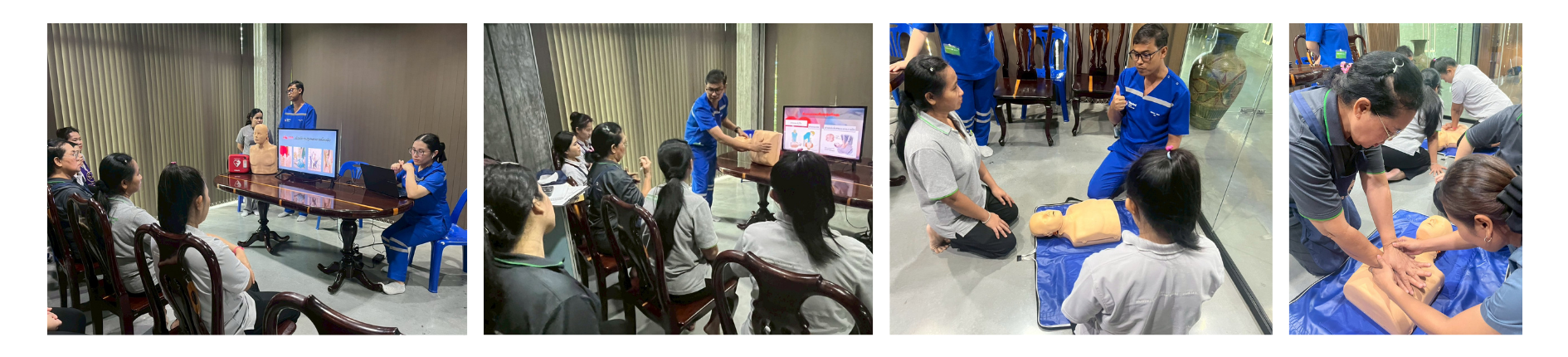
The Company provides pre-employment safety training for new employees, as well as emergency response drills such as fire drills, fire evacuation drills, and chemical spill response drills.
6.3 Inspection and Improvement of Working Environment
The Company regularly measures and assesses the working environment, and improves machinery, equipment, and workspaces to meet safety standards, thereby creating a safe and suitable working environment for all employees.
Plan Areas
| Plan Area |
|---|
| Fair employee compensation |
| Employee training and development |
| Promoting employee relations and participation |
| Migrant/foreign labor |
| Child labor |
| Occupational health and safety in workplace |
Employees — Workforce
Workforce Data
| Metric | Current Year | Previous Year | Two Years Ago |
|---|---|---|---|
| Total number of employees (Persons) | 248 | 265 | 282 |
| Number of male employees (Persons) | 138 | 139 | 152 |
| Number of female employees (Persons) | 110 | 126 | 130 |
| Total employment of disabled persons (people) | 3 | 3 | 3 |
| Total disabled employees (people) | 3 | 3 | 3 |
| Total male disabled employees (people) | 2 | 2 | 3 |
| Total female disabled employees (people) | 1 | 1 | 0 |
| Total disabled workers who are non-employee (people) | 0 | 0 | 0 |
| Contributions to the fund for promoting and improving the quality of life for disabled persons | 0 | 0 | 0 |
| Total number of male employees in operational level (Persons) | 130 | 133 | 145 |
| Total number of male employees in management level (Persons) | 6 | 3 | 3 |
| Total number of male employees in executive level (Persons) | 2 | 3 | 4 |
| Total number of female employees in operational level (Persons) | 103 | 115 | 120 |
| Total number of female employees in management level (Persons) | 3 | 6 | 7 |
| Total number of female employees in executive level (Persons) | 4 | 5 | 3 |
Employees — Remuneration & Provident Fund
Remuneration & Provident Fund
| Metric | Current Year | Previous Year | Two Years Ago |
|---|---|---|---|
| Total disabled employees (people) | 58,765,468.71 | 56,102,516.76 | 53,450,802.41 |
| Total male employee remuneration (Baht) | 32,942,471.76 | 30,096,752.49 | 28,474,866.31 |
| Total female employee remuneration (Baht) | 25,822,996.95 | 26,005,764.27 | 24,975,936.1 |
| Number of employees eligible to participate in PVD (persons) | 248 | 265 | 282 |
| Total number of employees joining employee provident fund (Persons) | 25 | 25 | 29 |
| Percentage of total number of employees joining employee provident fund to total number of employees (%) | 10.08 | 9.43 | 10.28 |
| Number of PVD members / Total eligible employees (%) | 10.08 | 9.43 | 10.28 |
| Total amount of provident fund contributed by the Company (Baht) | 156,022 | 238,272 | 240,728 |
| Total amount of provident fund contributed by employee (baht) |
Employees — Training & Development
Training Data
| Metric | Current Year | Previous Year | Two Years Ago |
|---|---|---|---|
| Average employee training hours (Hours / Person / Year) | 24.85 | 6.08 | 6.11 |
| Employee development and training expenses (baht) | 257,421.3 | 82,482.24 | 155,171.03 |
Employees — Occupational Health & Safety
Occupational Health & Safety Data
| Metric | Current Year | Previous Year | Two Years Ago |
|---|---|---|---|
| Total number of lost time injury incidents by employees (Cases) | 2 | 2 | 3 |
Employees — Labour Relations
Labour Relations Data
| Metric | Current Year | Previous Year | Two Years Ago |
|---|---|---|---|
| Total voluntary resignations (Persons) | |||
| Male employees who voluntary resigned (Persons) | |||
| Female employees who voluntary resigned (Persons) | |||
| Percentage of employee turnover leaving the Company voluntarily (%) | 19.75 | 13.7 | 13.83 |
| Evaluation result of employee engagement | 0 | 0 | 0 |
Employees — Employee Representation
Employees Are Represented Collectively
Yes
Forms of Representation
| Form |
|---|
| Welfare committee |
Employees — Targets
Has Set Employee Targets
Yes
Targets
| Indicator | Target Areas | Base Year | Base Year — Description | Target Year | Target Year — Description |
|---|---|---|---|---|---|
| Average training hours per employee | 2984 · Description: Employee training and development | 2,025 | Average training hours per employee: at least 8 hours per person per year. | 2,027 | Average training hours per employee: at least 12 hours per person per year. |
| Level of Employee Engagement with the Organization | 2985 · Description: Promoting employee relations and participation | 2,025 | Employee engagement level with the organization is not less than 60 percent. | 2,027 | Employee engagement with the organization not less than 80% |
| Employee turnover rate | 2985 · Description: Promoting employee relations and participation | 2,025 | Employee turnover rate not exceeding 3.5 percent. | 2,027 | Employee turnover rate not exceeding 2 percent. |
| Number of work accidents | 2988 · Description: Safety and occupational health at work | 2,025 | Number of work-related accidents equals 0 | 2,025 | Number of work-related accidents equals 0 |
Employees — Performance & Outcomes
Has Performance Results
Yes
Performance Description
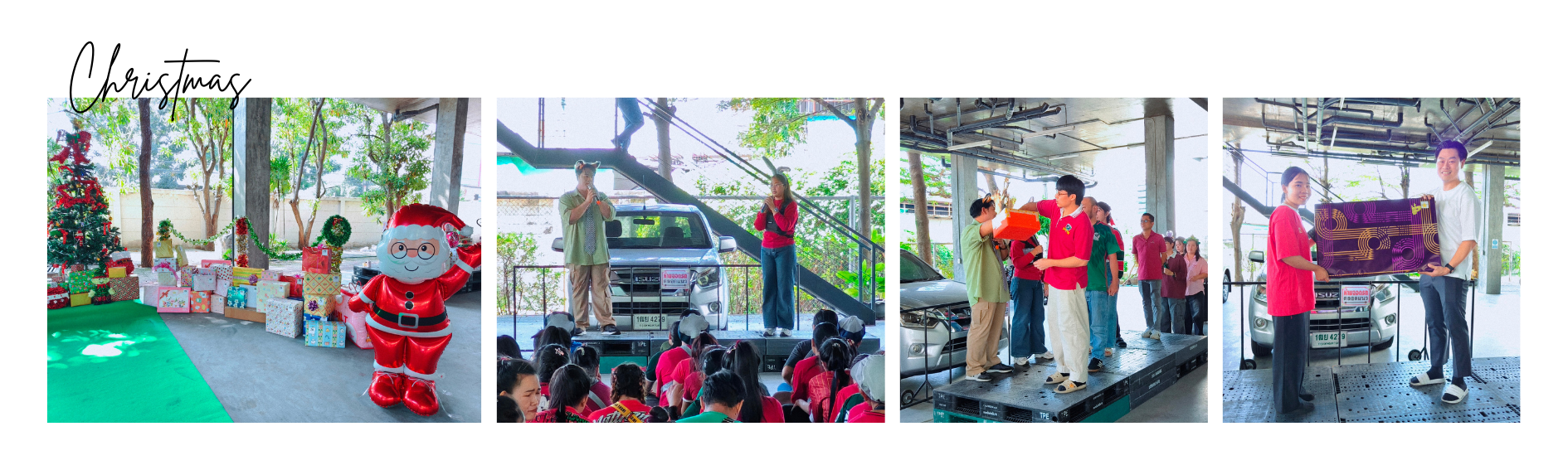
In 2025, the company places significant importance on employee care and personnel development, recognizing that respecting human rights and treating employees fairly are fundamental factors in building a good and sustainable organizational culture. The company has undertaken various initiatives to enhance employee engagement and satisfaction, focusing on equitable and fair employment, employee potential development, and fostering a friendly organizational culture that promotes teamwork. Key details and results are as follows:
1. Compensation and Welfare
The company has a fair, transparent, and performance-based compensation and welfare system that complies with labor laws and industry standards. This ensures employees receive appropriate income security and benefits, fostering motivation, satisfaction, and loyalty to the organization.
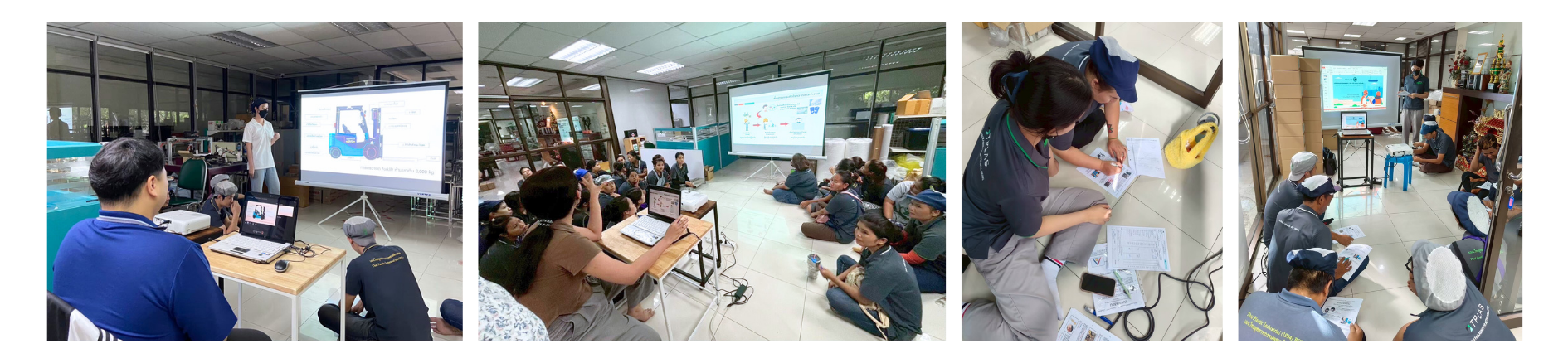
2. Employee Training and Potential Development
The company continuously develops the skills and potential of its employees through both internal training and support for external training. This equips employees with knowledge, abilities, and readiness for work, enabling them to adapt to changes in the business environment and enhancing the overall operational efficiency of the organization.
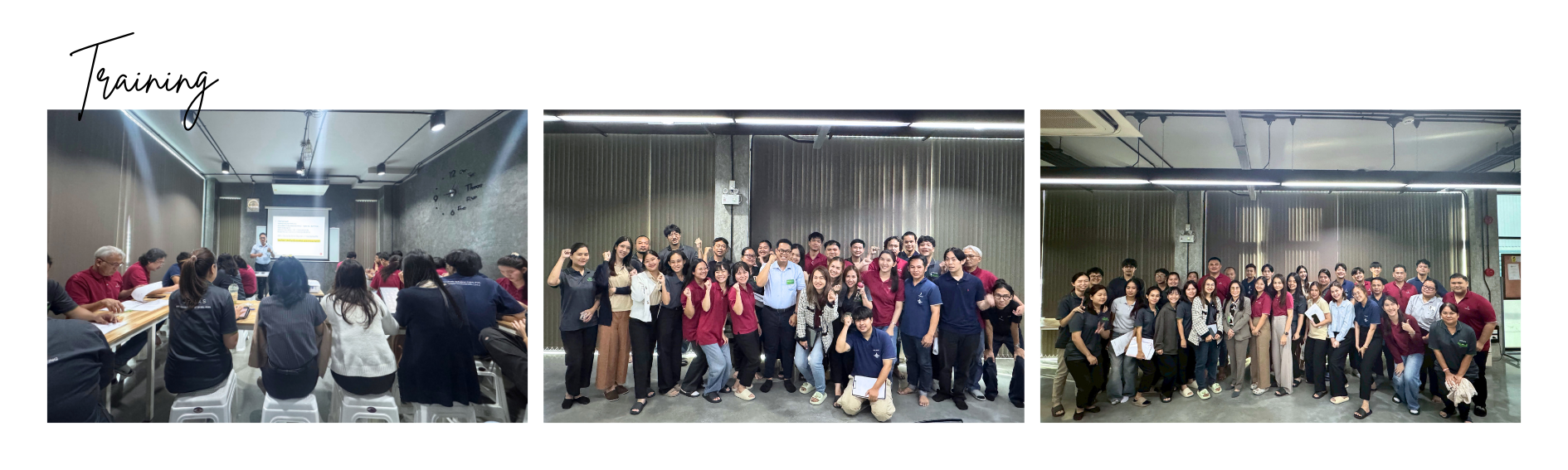
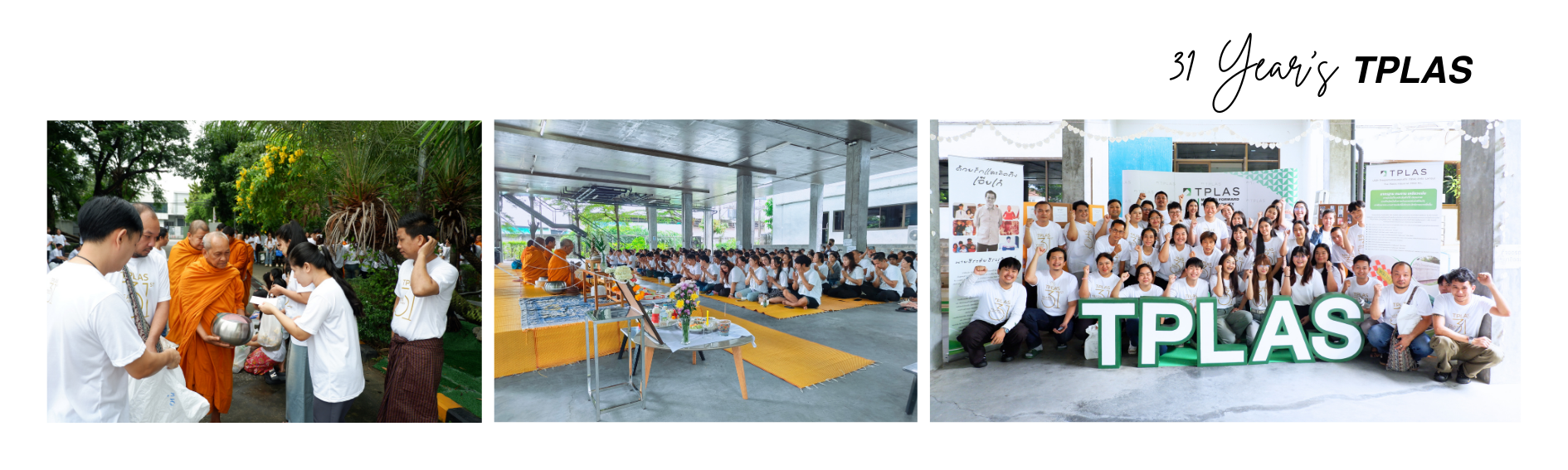
3. Employee Relations and Engagement
The company promotes open internal communication and provides opportunities for employees to participate in expressing opinions and various activities. This fosters a positive working atmosphere, organizational unity, and a shared sense of ownership in organizational development, as well as enhancing a positive image through social and community activities.


4. Migrant Worker Management
The company effectively manages migrant workers in compliance with laws and human rights principles, ensuring migrant workers receive equal rights, compensation, and welfare. This reduces labor risks and strengthens confidence in conducting business responsibly.
5. Prevention of Child Labor and Forced Labor
The company has clear policies and measures in place to prevent child labor and forced labor in all operational processes, along with regular monitoring and review of practices. This ensures operations comply with laws and human rights standards, building confidence among stakeholders.
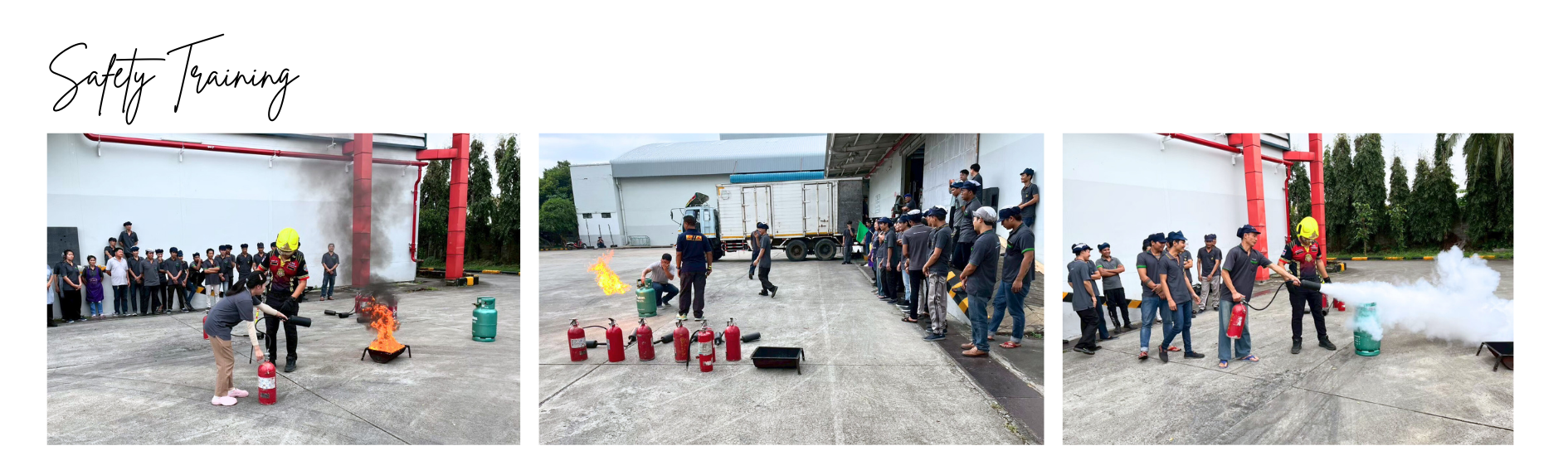
6. Occupational Safety and Health
The company prioritizes fostering a safety culture within the organization through continuous policy setting, training, and workplace environment inspections. This enables employees to work safely, reduces accident risks, and provides a working environment conducive to health and quality of life.
Customers — Plan & Guidelines
Has a Customer Management Plan
No
Plan Description
1. Responsible Production and Services for Customers
TPLAS is committed to providing responsible production and services to customers, with a continuous focus on product quality development that aligns with customer needs. We prioritize the production of high-quality goods to meet customer satisfaction, especially in handling customer complaints. The company's sales staff act as intermediaries for receiving complaints and suggestions from customers, forwarding them to the Quality Assurance (QA) department for product quality improvement and development. Prompt responses and efficient problem-solving enhance the customer experience and strengthen satisfaction and confidence in the company's products.
Furthermore, the company consistently reviews and enhances its production standards, utilizing data from complaints and suggestions as a guideline for improvement and development in various areas, such as refining production processes, implementing stricter quality control, and adopting modern technology in manufacturing. These efforts ensure that TPLAS products are of high quality and efficient in use, fully meeting customer needs. Through operations focused on responsible production and service, TPLAS is able to continuously maintain product quality standards and customer satisfaction, while also building trust and loyalty in our brand.
2. Enhancing Customer Satisfaction and Strengthening Customer Relationships
TPLAS prioritizes the development of customer satisfaction and the strengthening of long-term customer relationships. We strive to make customers feel valued and that they receive worth from using our products by focusing on excellent and friendly service. Having sales staff who are ready to serve and listen to customer feedback helps build strong and sustainable relationships. The company conducts annual customer satisfaction surveys to evaluate and analyze opinions, including suggestions provided by customers. This information is utilized to improve the quality of products and services, ensuring they genuinely align with customer needs.
Furthermore, we also provide channels for receiving customer complaints directly through our sales staff, offering a convenient and swift way for customers to express their opinions or complaints. Sales staff will forward this information to the relevant departments to ensure prompt resolution and development. The result is quick and targeted problem-solving, leading to an improved customer experience and increased satisfaction with TPLAS products and services. Strengthening customer relationships also involves monitoring customer usage to verify whether expected outcomes have been achieved, and utilizing this data for continuous development and improvement of our services. Additionally, special activities and loyalty programs, such as point accumulation and various privileges, are organized to make customers feel the value and importance that TPLAS places on them.
3. Protection of Customer Personal Data
TPLAS places high importance on the protection of customer personal data and strictly adheres to personal data protection laws. Customers are informed about the methods of data collection and usage through a Privacy Notice, and their consent is obtained for collecting this data for clear and transparent purposes. The company collects only necessary data and processes it meticulously, with defined retention periods based on usage objectives. Customers also have the right to access, rectify, or erase their data as stipulated by law, granting them rights and freedom to manage their personal data. To prevent unauthorized access or personal data breaches, TPLAS employs modern and effective security measures such as data encryption and access control, ensuring that customer data is fully protected. In the event of a data breach, the company will immediately notify customers and take swift corrective action to prevent potential impacts on their personal data. The company's Data Protection Officer (DPO) is responsible for overseeing and managing such incidents. All these operations not only enable TPLAS to effectively protect customer personal data but also build trust and confidence among customers in using the company's services sustainably. TPLAS remains committed to continuously improving and developing personal data protection measures to comply with laws and international standards.
Customers — Satisfaction Results
Customer Satisfaction Results
| Metric | Current Year | Previous Year | Two Years Ago |
|---|---|---|---|
| Evaluation results of customer satisfaction | 1 | 1 | 1 |
Customers — Targets
Has Set Customer Targets
Yes
Targets
| Indicator | Target Areas | Base Year | Base Year — Description | Target Year | Target Year — Description |
|---|---|---|---|---|---|
| Customer Satisfaction | 3009 · Description: Development of customer satisfaction and customer relationship | 2,024 | Customer satisfaction exceeding 85 percent | 2,027 | Customer satisfaction more than 95% |
| Customer Personal Data Protection | 3010 · Description: Consumer data privacy and protection | 2,024 | No personal data breach incidents occurred that affected 100% of customer confidence. | 2,027 | No personal data breach incidents occurred that affected 100% of customer confidence. |
| Reduce the number of customer complaints | 3007 · Description: Responsible production and services for customers | 2,025 | The number of customer complaints decreased by no less than 10 percent from the previous year. | 2,027 | Number of customer complaints decreased by no less than 20 percent from the baseline year. |
Customers — Performance & Outcomes
Has Performance Results
No
Performance Description
1. Responsible Production and Services for Customers in 2025
In 2025, the company continuously improved and developed its production and service processes to enhance its responsibility towards customers. This focused on developing product quality to align with customer needs and expectations. The company analyzed data from customer complaints and suggestions and used it as a guideline for systematically improving production steps, quality control, and service delivery at every stage. As a result of these operations, the company was able to reduce problems arising from production processes, increase operational efficiency, and continuously strengthen customer confidence.
Although the company received a total of 247 customer complaints in 2025, an increase of 3.78% compared to the previous year, the company remains committed to continuously improving product and service quality. Emphasis is placed on addressing issues directly, preventing recurrence, and elevating production and service standards to build long-term customer satisfaction and trust.
2. Developing Customer Satisfaction and Strengthening Customer Relationships in 2025
The company prioritizes developing customer satisfaction and building strong long-term relationships with customers. It regularly conducts customer satisfaction surveys through questionnaires and feedback surveys to analyze the collected data and use it as a guideline for continuously improving product quality and services.
In 2025, the company conducted two customer satisfaction surveys, evaluating overall results across four main aspects: corporate image, product quality, product delivery, and sales personnel. The survey results showed that the first survey in 2025 had an overall satisfaction level of 87.81%, and the second survey in 2025 was 85.59%. This indicates a consistently good level of customer satisfaction. Although the results of the second survey decreased slightly, they still demonstrate customers' confidence in the company's products and services.
Focusing specifically on the sales personnel, who are a key factor in building customer relationships, the evaluation results were high. The first survey in 2025 showed a satisfaction score of 93.58%, and the second survey in 2025 was 92.34%. This reflects the potential, professionalism, and attentiveness in service provided by the sales personnel, who play a crucial role in fostering customer trust and loyalty.
Furthermore, the company emphasizes strengthening long-term relationships with customers. Sales personnel regularly visit customers to gather feedback, suggestions, and needs, using this information to improve products and services to better meet customer requirements. This is coupled with organizing special activities and loyalty programs to create positive experiences, satisfaction, and sustainable brand confidence.
3. Protection of Customer Personal Data
In 2025, the company places great importance on the protection of customer personal data and has strictly implemented data security measures. A Personal Data Notice (Privacy Notice) has been prepared to clearly and transparently inform customers about the purposes, methods of collection, use, and disclosure of personal data, as well as obtaining customer consent in accordance with legal requirements.
As a result of these operations, the company is able to manage customer personal data appropriately, in compliance with relevant laws and standards. In 2025, no incidents of personal data breaches affecting customer confidence were found, reflecting the company's commitment to data security and building sustainable trust with customers and stakeholders.
Community & Social — Plan & Guidelines
Has a Community & Social Plan
Yes
Plan Description
The company prioritizes workplace safety, making it the duty and responsibility of all employees to perform their work safely. It aims to foster a safety culture within the organization by instilling awareness among employees of the importance of safety, working cautiously, and considering the well-being of themselves, colleagues, and stakeholders throughout every process in the value chain. To ensure efficient safety operations, the company has announced its "Quality, Occupational Health, Safety, and Working Environment Policy," which covers all operational areas, including factory premises, operational sites, and office buildings, and disseminates information via the company's website to ensure that employees and relevant parties can access correct practices comprehensively.
o Occupational safety and health
Comply with and develop occupational health and safety standards in accordance with relevant laws and regulations.
Allocate appropriate resources, including budget, time, and personnel, to effectively implement occupational health and safety measures.
Reduce work-related accidents through a proactive approach, by identifying hazards, assessing risks, and implementing serious corrective actions.
Encourage employees to participate in reporting unsafe conditions to facilitate improvements and prevent potential incidents.
Prevent work-related illnesses and diseases to ensure employees maintain good health and can perform their duties safely.
o Environment
Comply with and develop environmental standards in accordance with relevant laws and regulations.
Promote energy conservation and the use of renewable energy to support environmentally friendly business operations.
Committed to controlling and reducing water and air pollution to prevent contamination of the public and communities.
Furthermore, the company has established a Safety, Occupational Health, and Working Environment Committee for the establishment to monitor and evaluate safety performance, as well as propose corrective measures to reduce risks and prevent potential losses. The company is committed to continuously developing and elevating safety standards to create a safe working environment for all employees and build confidence among stakeholders in all sectors.
The company continuously emphasizes promoting a safety culture. This year, various activities have been organized to raise safety awareness among employees and business partners, as follows:
o Safety awareness training before entering operational areas.
The company has organized training on safety standards for all new employees and business partners before they enter operational areas. Additionally, information on safety, environment, and healthcare is disseminated through various channels, both in the workplace and via email, to ensure employees are comprehensively informed of necessary information.
o Measurement and assessment of the working environment.
The company regularly conducts measurements and assessments of the working environment to analyze employees' health risks. It also establishes health check-up programs aligned with risk factors to promote health and enhance the quality of life for employees.
o Emergency response plan drills.
The company prioritizes preparedness for emergency situations by conducting drills for chemical and fire emergencies during both day and night. Furthermore, basic firefighting training, fire drills, and fire evacuation drills are conducted annually for both the factory and the head office, to ensure employees can follow correct procedures during actual incidents.
The company aims for these activities to strengthen safety awareness and develop a sustainable safety culture within the organization, with the goal of achieving zero accidents. In addition to operations focused on employee safety, the company also recognizes safety and occupational health throughout the business's supply chain. The company has established an Occupational Health, Safety, and Environment policy and disseminates it to stakeholders in all sectors, including partners, contractors, and other agencies involved in business operations.
Plan Areas
| Plan Area |
|---|
| Occupational health, safety, health, and quality of life |
Community & Social — Targets
Has Set Community & Social Targets
Yes
Targets
| Indicator | Target Areas | Base Year | Base Year — Description | Target Year | Target Year — Description |
|---|---|---|---|---|---|
| Number of complaints regarding health and safety impacts from the community | 3041 · Description: Occupational health, safety, health, and quality of life | 2,025 | Number of complaints regarding health and safety impacts from the community: 0 cases. | 2,026 | Number of complaints regarding health and safety impacts from the community: 0 cases. |
| Number of projects for community well-being | 3041 · Description: Occupational health, safety, health, and quality of life | 2,025 | Number of community well-being projects: 3 projects | 2,027 | Number of community well-being projects: 5 projects |
Community & Social — Performance & Outcomes
Has Performance Results
Yes
Performance Description
1. Number of complaints regarding health and safety impacts from the community
The Company continuously prioritizes conducting business with consideration for the health and safety impacts on communities surrounding its establishments. This involves monitoring, inspecting, and controlling operational processes to comply with relevant laws and standards, as well as providing appropriate channels for receiving community complaints.
In 2025, the Company received no complaints regarding health and safety impacts from the community. This reflects the effectiveness of its safety measures, operational impact control, and the maintenance of good relationships with surrounding communities. The Company continues to set a continuous target to have no complaints regarding health and safety impacts from the community in 2026.
2. Number of projects for community well-being
The Company continuously implements activities and projects to promote the quality of life and well-being of surrounding communities, under the concept of socially responsible business operations, covering environmental, health, safety, and social development aspects.
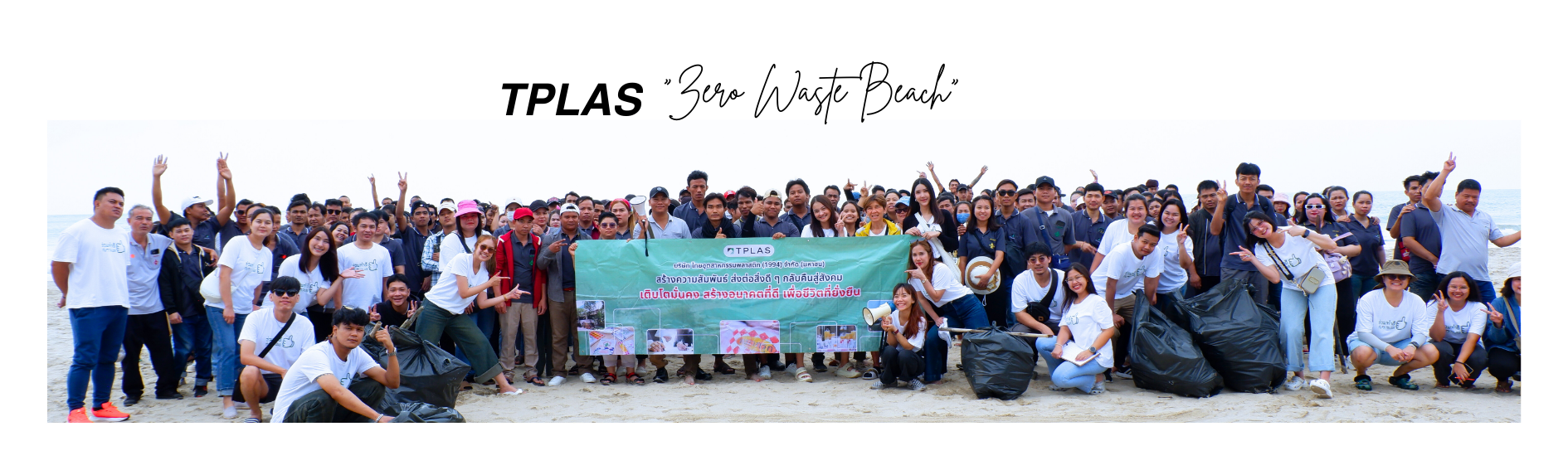
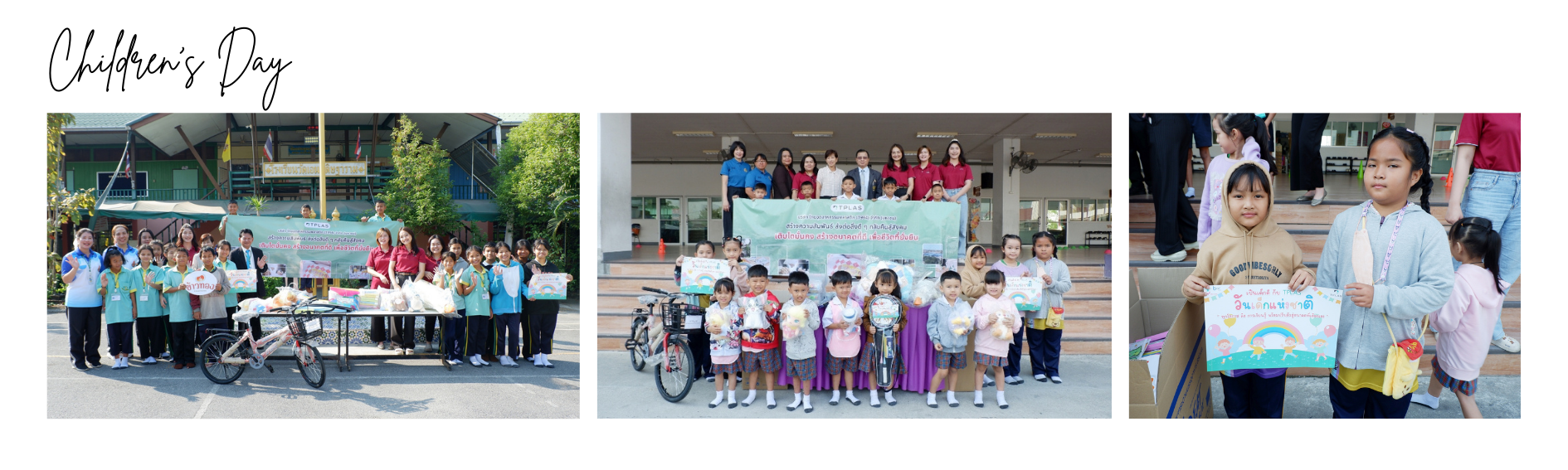
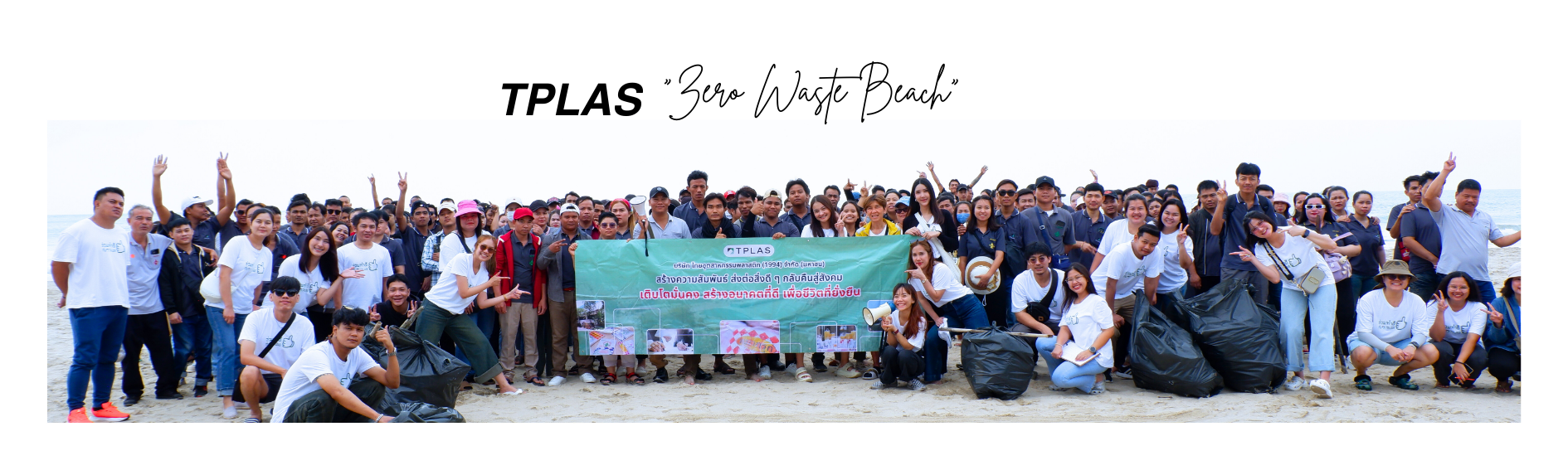
In 2025, the Company implemented 2 projects for community well-being.
-
Children’s Day TPLAS Sharing Happiness
-
TPLAS “Zero Waste Beach”
The Company plans to continuously expand these operations, aiming to increase the number of projects to 5 by 2027, in order to strengthen good relationships between the organization and the community and support long-term sustainable social development.
Law Violation Incidents
Law Violation Incidents
| Metric | Current Year | Previous Year | Two Years Ago |
|---|---|---|---|
| The total number of cases or incidents of significant violations of laws or regulations regarding social and human rights (Cases) | 2 | 3 | 2 |
| The total number of cases or incidents that cause significant labor disputes (Cases) | 0 | 0 | 0 |
| The total number of cases or complaints related to consumer rights violations (Cases) | 0 | 0 | 0 |
| The total number of cases or complaints related to partner rights violations (Cases) | 0 | 0 | 0 |
| The total number of cases or incidents that cause disputes with the community/society (Cases) | 0 | 0 | 0 |
| The total number of cases or incidents related to cyber security or customer data breaches (Cases) | 0 | 0 | 0 |
| The total number of cases or incidents related to safety and occupational health at work (Cases) | 2 | 3 | 2 |
Law Violations — Case Detail & Corrective Measures
Incidents & Corrective Measures
| Year | Incident Detail | Status | Remediation Measures | Non-financial Impact |
|---|---|---|---|---|
| 2,025 | An employee sustained a work-related accident (a minor accident). The employee received initial first aid and was treated at a medical facility for their symptoms. The attending physician confirmed that there were no serious symptoms, and the employee is able to return to work as usual. | Incident no longer subject to action | 1. The company has established clear and transparent communication of information regarding incidents and new safety measures, utilizing various channels such as team meetings, internal system notifications, and internal organizational media announcements. 2. To prevent recurrence of incidents, the company has implemented comprehensive safety and occupational health training programs for all levels of employees, including quarterly refresher safety training for employees. 3. The company has conducted inspections and improved the working environment to enhance safety, focusing on risk reduction and prevention of accident recurrence. | The occurrence of work-related accidents or illnesses may have psychological and emotional impacts on other employees, leading to anxiety, fear, and job insecurity, which can reduce work motivation and performance. |